PROFESSOR ANGE ANTOINE ABENA. PRESIDENT OF THE DENIS SASSOU-N'GUESSO UNIVERSITY
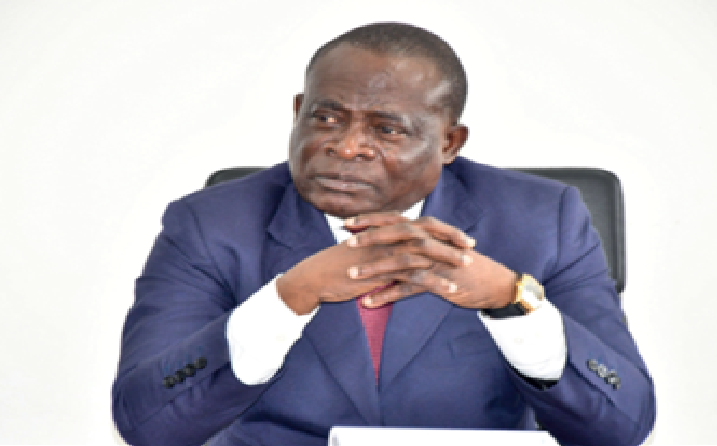
“To build a university of
excellence, modern and resolutely pan-African”: this is the ambition of
Professor Ange Antoine Abena at the head of the Denis Sassou-N'Guesso
University.As the institution prepares to validate its new strategic plan,
focused on cutting-edge research, quality assurance, and student
entrepreneurship, its president provides a frank overview. From the gradual
commissioning of the Kintélé infrastructure to the systematic evaluation of
training programs by CAMES, including the strategic partnership with SNPC and
the project for a 100-hectare incubator in Bambou, he details the roadmap of an
institution resolutely committed to training the scientific, technological, and
economic elite of tomorrow.
Interview by Wilfrid Lawilla
DIANKABAKANA
THE METROPOLIS: You are at
the head of this university five years after its inauguration. It was designed
to offer an alternative to the traditional university model. How is this
renewed vision translated concretely into the day-to-day teaching?

PR ANGE ANTOINE ABENA : Thank you for your interest in our alma mater and for making the trip to Kintélé. The vision guiding our university was initiated by the Head of State: to build a university of excellence, modern, scientific, technological, and resolutely pan-African.
We want to make a genuine elite available to the country and the continent.
Our ambition is to train young
Congolese and Africans who are both highly qualified professionals and
responsible citizens, aware of the challenges facing their country and their
continent. It is in this spirit that we have developed our first strategic
plan, the central pillar of which is the transformation of the individual. We
want to make this culture of commitment the very identity of Denis
Sassou-N'Guesso University.
In addition to this, there
is a constant demand for quality. We have therefore made the choice, still rare
for a public university in the CAMES area, to voluntarily submit all of our
courses to CAMES evaluation in order to guarantee their excellence.
The results of these first
five years are encouraging. Starting from scratch, the university now has four
fully operational institutions out of the ten planned in the long term. We have
just celebrated the fourth graduating class of Bachelor's students and the
second graduating class of Master's students. Our institution now enjoys
regional and international recognition, while our teaching staff is gradually
strengthening with fifteen tenured assistant professors and 21 other candidates
awaiting the results of the 2026 CAMES session. [This interview was conducted
on July 25, 2026, before the publication of the results, editor's note.]
In parallel, we structured
our research policy around four strategic axes directly linked to national
priorities, in order to open our doctoral schools as early as October. We also
made quality assurance and digital transformation priorities. A dedicated
quality assurance unit was created, and digitalization is progressing:
applications for competitive exams are now submitted online, and in some pilot
institutions, students are already receiving their results on their phones. Our
assessments show that we have achieved 54% of the objectives of our strategic
plan with only 17% of the initially allocated budget. This result demonstrates
the commitment of our teams, but also the need to strengthen our funding
capacity.
It is with this in mind that
we have forged a strategic partnership with SNPC, which will support the
implementation of our next strategic plan. Finally, infrastructure development
is continuing steadily.
This expansion, while driven
by construction and funding constraints, allows us to smoothly support the
university's growth. Our goal now is to integrate a new institution each year
in order to continue building a university of excellence serving Congo and
Africa.
You mentioned the fifteen
tenured lecturers with the rank of assistant professor. But to date, how many
permanent teaching staff does the university have?
We currently have around one
hundred permanent faculty members. This staff is divided into assistant
professors, teaching assistants, and technical teaching and research assistants
(ATERs). ATERs hold a Master's degree, while assistant professors and lecturers
all hold a doctorate. Lecturers are those who have successfully passed the
CAMES competitive examinations.
The university was designed
with a pan-African focus. Today, how many students from other African countries
do you host?
This remains one of our
weaknesses. We currently host fewer than ten international students. However,
we are actively working to strengthen this pan-African dimension. I am
convinced that with the ongoing progress and the university's growing
influence, this number will increase rapidly in the coming years.
Looking ahead, what are the
major projects that will shape the development of UDSN over the next five
years?
We have
therefore made the choice, still rare for a public university in the CAMES
area, to voluntarily submit all of our courses to CAMES evaluation in order to
guarantee their excellence.

A university
cannot become a space for favoritism or cronyism; it must remain a place of
high standards, competence, and merit.
At our last Board meeting,
held on July 22nd, we adopted a new strategic plan structured around five major
pillars. The core of our work for the next five years will be focused on
research. In concrete terms, this will translate, starting this fall, into the
opening of two doctoral schools designed to welcome our Master's graduates as
well as students from other African countries. We now have about ten
laboratories equipped with modern infrastructure. In particular, we have just
received the final batch of equipment for the renewable energy laboratory, one
of the most advanced facilities in Central Africa.
We also intend to strengthen
our international partnerships. A civil engineering laboratory project,
developed in cooperation with a Chinese university, is currently undergoing
validation by the relevant ministry. The other fundamental pillar of this new
five-year period remains quality assurance. This requires impeccable
administrative, financial, and academic governance, as well as strict adherence
to our procedures. We reject any recruitment practices based on nepotism. A
university cannot become a space for favoritism or cronyism; it must remain a
place of high standards, competence, and merit. It is this culture of rigor
that distinguishes a university of excellence from a routine administration.
For this new strategic plan, our objective is clear: after a 54% implementation
rate during the previous five-year period, we aim to reach 80% this time.
UDSN has a strong ambition:
to train graduates who are immediately employable while developing an
entrepreneurial spirit. How does the university concretely support its
students?
Last February, on the
occasion of the university's fifth anniversary, we organised a major forum
entitled "Denis Sassou-N'Guesso University World of Work".
We brought together
representatives from key sectors, including mining, hydrocarbons, energy, and
local government, to strengthen ties between the university and the
professional world. This approach is central to our project. At our last Board
meeting, we also included representatives from the SNPC (National Petroleum
Company of Congo) and the Secretary General of the Kintélé town hall. This
outreach to socio-economic stakeholders will be further strengthened over the
next five years.

Entrepreneurship is already
a reality at UDSN. One of our students won first prize in a national innovation
competition before taking second place in the continental final held in
Morocco. We want to amplify this momentum. Our credo is simple: business at the
heart of the university, and the university at the heart of business.
We are currently setting up
a structure dedicated to the professional integration and follow-up of our
graduates. An expert will soon be tasked with evaluating their placement rates
in order to measure the real impact of our training programs on the job market.
However, there is still progress to be made. The structure established on our
campus by the Ministry of Employment is not yet fully fulfilling its mission.
It would benefit from
offering more activities, training courses, and seminars for students. I have
brought this to the attention of the authorities, as quality support requires
qualified and fully engaged human resources. Finally, thanks to the support of
the Minister of Forestry, the university now has nearly 100 hectares of land in
Mbamou, about sixty kilometers from Kintélé.
We will develop a large
incubator there to support the innovative projects of our students and
researchers. Our ambition is to transform UDSN into a true
"university-business" model, capable of creating value, innovation,
and jobs.
Admission to our institutes and prestigious schools is by competitive
examination and is accompanied by the presentation of a professional project.
In conclusion, UDSN's motto
is "Rigour, Excellence, Enlightenment." What would you say to a young
Congolese, African, or diaspora high school graduate?
At UDSN, we strive for
excellence. Admission to the Faculty of Applied Sciences is reserved for those
holding a baccalaureate degree with a minimum average of 12/20. Admission to
our institutes and graduate schools is based on a competitive entrance exam and
requires the submission of a professional project. We want to understand each
candidate's ambitions and ensure they align with our country's development
priorities.
Our goal is clear: to
provide Congo and Africa with a true scientific, technical, and managerial
elite. We invite young people to join a demanding university where merit,
rigor, and innovation are the keys to success. I am convinced that by combining
ambition, ethics, and love of country, we will train the women and men who will
build the Congo of tomorrow.
What message would you like
to send to parents?
I would first like to tell
them that Denis Sassou-N'Guesso University is a tremendous opportunity for
their children and an asset for the entire nation. They should be proud of it
and consider it a collective heritage. I also appeal to everyone's sense of
responsibility. The acts of vandalism and looting that have affected some
university infrastructure are deeply regrettable.
By destroying this
equipment, we are jeopardizing the learning conditions of our own children.
University residences, in particular, cannot be fully operational because facilities
have been damaged or stolen. Protecting this university means protecting the
future of our youth.
Finally, I urge parents to
consider education as the best investment they can make for their children.
With the opening of our doctoral schools, we are raising our standards even
further. At UDSN, we will make no compromises on quality or excellence. This is
the price we must pay to develop the skills that Congo and Africa need.
No comments for the moment