Malaria in the DRC: The need to scale up action!
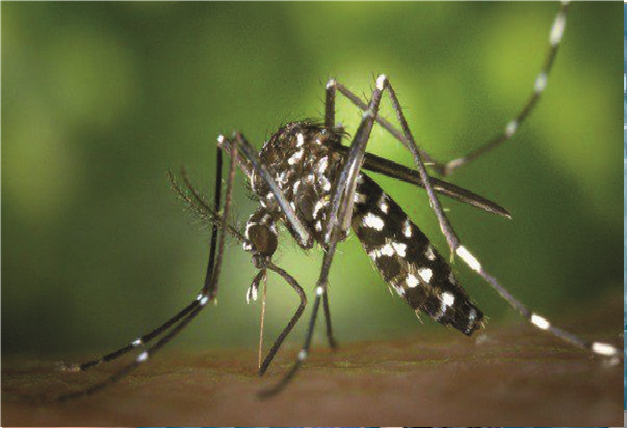
Malaria is a tropical disease transmitted by mosquitoes that is prevalent in Africa. In 2015, a report published by the World Health Organization (WHO) on the 2016-2030 malaria control plan made a significant announcement: six countries on the African continent (Algeria, Cape Verde, Eswatini, Botswana, South Africa, and the Comoros) had the potential to eradicate the disease. In January 2024, further good news arrived: Cape Verde became the third African country to be declared malaria-free, after Mauritius in 1973 and Algeria in 2019.
An analysis by Oasis KODILA. Economist and author of the recent book Financing Development in the DRC: Diagnosis, Opportunities and Perspectives.
The Democratic Republic of Congo (DRC) has the second highest number of malaria cases and deaths in the world. According to official data collected in the various annual reports of the health sector and the National Malaria Control Program (PNLP), in 2021, more than 21 million cases of malaria were recorded in the DRC, including more than 2 million cases of severe malaria (9.77%), and 10 million children under the age of 5 suffered from malaria in 2021, including 1 million cases of severe malaria. Pregnant women were also affected, with 1 million cases of malaria recorded, including 894,196 cases of uncomplicated malaria and 221,421 cases of severe malaria (19.84%). Beyond its endemicity, malaria remains one of the deadliest diseases. In 2021, 22,729 Congolese people lost their lives as a result of malaria, of which 15,297 occurred in children under the age of 5, or 67%.
Malaria-related deaths are trending downward. “The 2022 National Malaria Control Program report indicates that the country recorded 27,296,419 cases of malaria, including 13,300,804 cases in children under five and 1,209,537 cases in pregnant women. The country mourned 24,880 deaths attributed primarily to this endemic disease, including 16,921 children under five, representing 68%. Almost the same trend was observed in 2023, as the DRC recorded 27,657,762 cases of malaria and 24,344 deaths, mainly due to malaria, representing a slight increase in the number of cases and a slight decrease in the number of deaths,” stated Roger Samuel Kamba, the Congolese Minister of Health, Hygiene, and Prevention.
He added: “Thus, achieving zero cases of malaria in the DRC is a challenge addressed to all of us without exception, whether we live in the city or the countryside. This commitment must not be limited to words, but must be translated into daily actions. This implies that we must all fight malaria by adopting new behaviors that must materialize through the participation of households, families, and communities in the fight against malaria, so that one day we can live in a malaria-free Congo.” The World Health Organization (WHO), in its 2023 report on the global malaria situation, reveals that the DRC is among the twenty-nine countries that accounted for 95% of the total number of cases worldwide, with a score of 12%.
In truth, the Government has not remained indifferent to this public health problem, given the increase in disbursements to deal with this disease.
In fact, the government has not remained indifferent to this public health problem, given the increase in disbursements to deal with this disease.
More specifically, it organized its response around prevention, care, and support strategy. Regarding prevention, the State allocated the largest share of this disbursement, namely 29% in 2021, to the distribution of long-lasting insecticidal nets (LLINs).
This likely contributed to increasing the number of LLINs distributed from 20 million to 22 million, representing a 9.5% increase. The majority of this distribution was through mass campaigns (16.7 million) compared to routine distribution (5.2 million). Nevertheless, despite this growth in distribution, the current level remains far below that of 2016, when the number of LLINs distributed exceeded 31 million.
Furthermore, increasing the number of LLIN distributions is not the only challenge. Indeed, according to MICS-Palu 2018 data, only 44.1% of the population has access to insecticide-treated bed nets (ITNs). This distribution remains unequal: 59.4% of the wealthiest population has access, compared to 28.4% of the poorest. The use of these ITNs is also problematic. Among those who have access, 83% of the population used one last night, while only 52% of household members who slept the previous night used any type of bed net. These challenges, among others, explain the lack of correlation between malaria incidence and the distribution of LLINs/ITNs. To address these challenges, multi-sectoral actions have been envisaged within the framework of the national malaria control strategy to maintain and strengthen the level of availability of LLINs in households as well as their systematic and continuous use.
In truth, the Government has not remained indifferent to this public health problem, given the increase in disbursements to deal with this disease.
In addition to distributing long-lasting insecticidal nets (LLINs), the DRC, through its National Malaria Control Program (NMCP), is striving to comply with WHO recommendations regarding intermittent preventive treatment for pregnant women. It should also be noted that the government is attempting to increase communication and advocacy efforts regarding this disease.
Thus, it dedicates 6% of its disbursement to this cause and updates the care guidelines. In particular, it develops the technical care sheets.
Therefore, it devotes a good part of its disbursements to the support strategy (training, monitoring and evaluation, epidemiological surveillance, supply of inputs, operational research).
Despite state intervention in vector control, as mentioned, malaria is far from being eradicated. This reality has significant consequences for the development of the DRC. In 2001, the renowned American development economist Jeffrey Sachs found in a study that GDP per capita growth in countries with a high prevalence of malaria would be 1.3% lower per year. A 10% reduction in malaria would be associated with 0.3% higher growth. More recently, other studies have even indicated that malaria is one of the main causes of underdevelopment in Africa.
Fundamentally, several factors are at play beyond the catastrophic costs it entails. Malaria justifies the hypothesis of child replacement/the "surviving child" hypothesis: due to malaria-related mortality, parents are incentivized to have more children to replace those who die or will die, or due to the increased risk of pregnancy. This rise in fertility reduces educational investment in children, increases the dependency ratio, and hinders the demographic transition, which offers significant opportunities to pursue a development path. Furthermore, malaria deprives the economy of factors of production, thus reducing productivity, and also increases the likelihood of adults being unable to find paid employment.
Among the factors, there is also the negative impact of malaria on cognitive ability and human capital. One study attributed 13 to 50% of school absences due to illness to the disease. Another shows a positive effect on grade repetition and completion rates in primary school, and when malaria is eradicated, the number of years of schooling and literacy increases. Other studies have shown a causal correlation between this disease and academic achievement and cognitive performance. In short, the list of ways malaria can influence development is long. This length is more than enough to spur action. Recent results from Algeria and Cape Verde show that nothing is impossible. Let's get to work…
No comments for the moment